HOI AN ON BIKE
Once known as Faifo, Hoi An was one of the orient's major trading ports in the 16th and 17th centuries.
Hoi An City Tours
Take a step back in time on a walking city tour of Hoi An -a well-known ancient town in Vietnam and a UNESCO World heritage site. A private guide leads you through the well-kept historic district of this once-prosperous seaport city.
Nha Trang Boat trip
Overview Transferring to Da Chong Whalf, about 18 km away from the city center for embarking on boat, cruising on Nha Phu bay.
Ha Long bay
Recognized by Unesco as a World Heritage Site since 1994 for it thousands of natural islands, Ha Long Bay is a legendary world, and one of the most magnificent scenic spots in Vietnam as well.
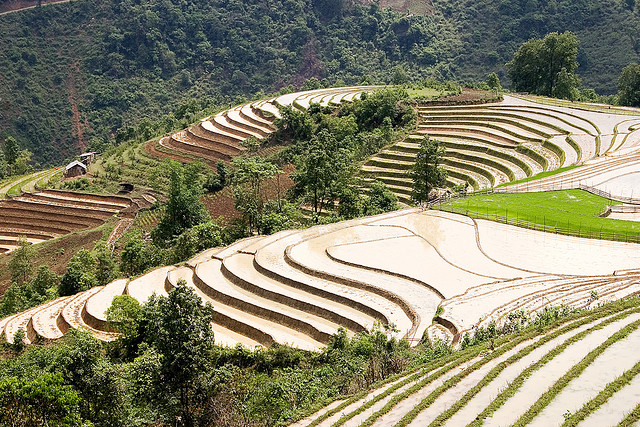
Discover Stunning Terraced fields in Northwest Vietnam
The terraced fields in the mountain district of Mu Cang Chai in Yen Bai, Vietnam are associated with the developmental history of the Mong ethnic minority group.
Staying afloat in a picturesque lagoon
NORTHWEST VIETNAM 10 DAYS
You will be picked up at 20:00 from your hotel and transferred to the train station. Here, you take a night train to Lao Cai. The night train leaves at 21:10. Overnight stay on train in a 4-berth soft sleeper cabin.
The train arrives at Lao Cai train station early in the morning, at around 06:00. Pick-up and transport by shared bus to Sapa (35km – about 1 hour drive). In the morning, there will be some spare time to enjoy the fantastic view of the Sapa valley and explore the local market. In the afternoon the guide will provide with more information about the tour. After this we’ll visit the Cat Cat village, where the Black H’mong people live. Overnight stay at o hotel in Sapa.
After breakfast, leaving the hotel and trekking to Lao Chai village to visit the Black H’mong people. From Lao Chai you’ll continue to Ta Van village to visit the Zay people. Dining and sleeping in a local homestay in the Ta Van village.
Trekking distance: 15km
Walking tour to Giang Ta Chai village to visit Red Dao people. The women of Red Dao have a very colorful red embroideries, coins on their clothing, and on their head they wear a red scarf. Some of the women have shaved off their eyebrows because a hairless face is considered, by the the Red Dao people, to be very beautiful. We then make our way to the waterfall in Giang Ta Chai. In the afternoon we’ll make our way to Ban Ho, to visit the Tay people. If we arrive early there will be some spare time to go for a swim in the nearby river.
Trekking distance: 15km
After breakfast, trekking up to Su Pan hill (3km). Pick-up and transport back to Sapa. In the afternoon, there will be some spare time to experience the colorful Sapa market. Overnight stay at a hotel in Sapa.
In the morning driving in a car to Lai Chau. On the first part of the trip we will pass the beautiful Silver Waterfall Thac Bac and Tram Ton Pass (1900m). Later there will be a chance to visit Lao, Lu, Thai, Mang and Black Dao villages. Arrival in the afternoon to Lai Chau – one of the hottest places in Vietnam during the summer months. Overnight stay at a hotel in Lai Chau.
Starting the day by driving to Dien Bien Phu. While driving, one can enjoy the spectacular view of the forested hills. Making several stops on the way to visit some of the minority villages (Kho Mu, Thai and H’mong). Arrival in the noon at Dien Bien Phu in the flat Muong Thanh Valley. Dien Bien Phu was the place, where the last battle between the forces of Ho Chi Minh’s Viet Minh army and the French(1954). In the afternoon visiting the Museum in Dien Bien Phu, which gives a better understanding of the Vietnamese history. Overnight stay at a hotel in Dien Bien Phu.
Leaving Dien Bien Phu and driving to Son La. The drive is beautiful, with high mountains, limestone rocks, gorges, rice fields and small villages. Before arriving in Son La the bus makes a stop in a small village, where there will be a chance to visit the Thai people. Overnight stay in Son La.
Leaving the hotel at 08:00 in the morning for a short trek and visiting another Thai village. Arrival late in the afternoon at Lat village in Mai chau, where we’ll spend the night at local homestay.
Leaving Mai Chau at 08:00 in the morning and heading for Hanoi. On the way to Hanoi we’ll visit the Hoa Binh Hydro-Electric Power. Later in the afternoon we’ll arrive in Hanoi, where the tour ends.
|
Class
|
Size of group
|
Booking
|
|||||
|
1 pax
|
2 pax
|
3 pax
|
4+ pax
|
Children
|
Single Room
|
||
|
Standard
|
1,200
|
688
|
575
|
529
|
344
|
0
|
|
NORTHEAST VIETNAM 4 DAYS
Duration: 4 Days
Day 1: Hanoi – Ba Be National Park.
Day 2: Ba Be Lake – Cao Bang.
Day 3: Cao Bang – Ban Gioc waterfall – Cao Bang.
Day 4: Cao Bang – Lang Son – Hanoi.
You will be picked up at 08:00 by a private van/mini bus and we depart for Ba Be National Park. On the way there stopping in Thai Nguyen city to visit the Museum of the Culture - the second largest museum in Vietnam for ethnic minorities. We continue our drive to Ba Be National Park. Spending the night with a local family, in a Tay village overlooking Ba Be Lake.
Day 2: Ba Be Lake - Cao Bang (115 km - 4 hours). (B, L, D)
In the morning off to a boat trip on Ba Be Lake. It is a beautiful area surrounded by high limestone hills and tropical forest. You will stop at Dau Dang Waterfall and the impressive Puong Cave which is 30m high and 300m long. The river flows through the cave, so the boat will take you through to the other side. Return to the homestay, from where you will drive to Cao Bang. Arrival in Cao Bang in the evening and stay in a hotel.
Day 3: Cao Bang - Ban Gioc waterfall - Cao Bang (180 km - 8 hours). (B, L, D)
At around 09:00am driving to the largest waterfall in Vietnam, Ban Gioc. Having lunch en-route. Later in the afternoon heading back to the hotel in Cao Bang.
Day 4: Cao Bang - Lang Son - Hanoi (330 km - 10 hours). (B, L)
At around 08:00am we drive to the border town Lang Son, where lunch will be served. In the afternoon, we will visit the beautiful caves in the town and the local market before driving to Hanoi. We will be back to Hanoi around 17:00.
(B: breakfast; L: lunch; D: dinner)
- Tipping is not compulsory but it is highly recommended if you are satisfied with the services.
What to bring
Note: Price in USD per person
Inclusive of:
Private van/mini bus for transfers
Boat trip on Ba Be Lake
Accommodation (1 night in homestay; 2 nights in hotels)
Meals according to the program
All entrances fees and permit fees
English speaking tour guide.
Exclusive of: Insurance, drinks, personal expenses and tips. |
||||||||||||||||||||||
CENTRAL HIGHTLIGHTS 5 DAYS
Duration: 5 Days
You will be picked up from Hue train station or from Phu Bai airport and transferred to your hotel in the center of Hue city. In the afternoon, boat trip on the Perfume River and visit to Thien Mu pagoda. On return, you can relax and admire the beautiful landscapes along the River.
Overnight stay in Hue at Festival Hotel (***) or similar.
Day 2: Hue - Da Nang (B, L, D)
In the morning, visit to the Tombs of Emperor Tu Duc & Emperor Khai Dinh and the Royal Citadel. After lunch, travel to Danang (110km ) via Hai Van Pass - one of the most scenic hillside roads in Vietnam. At the height of 500m above the sea level the Pass produces spectacular cloud formations and views of sprawling Da Nang to the south and picturesque Lang Co Beach to the north. Arrival in Da Nang late in the afternoon followed by lunch in one of the many local restaurants.
Overnight in Da Nang city at Pacific Hotel (***) or similar.
Day 3: Da Nang - Hoi An (B, L)
In the morning the trip continues to Hoian with a visit to Cham Museum, Marble Mountains, stone carving village of Non Nuoc and white sandy beach. After lunch at a local restaurant in Hoian, the rest of the day is at your own disposal. Overnight at Hoian at Lotus Hotel (***) or similar.
Day 4: Hoi An (B, L)
The day starts with a half day tour in Hoian. You'll have a chance to explore the ancient narrow streets of Hoian and visit historic temples, the old house of Tan Ky, the Japanese Covered bridge, Thu Bon and Phuc Kien assembly hall. Overnight at Hoian at Lotus Hotel (***) or similar.
Day 5: Hoian - My Son - Departure from Da Nang (B, L)
Trip to My Son (55km) on rural roads in order to explore the architectural treasure and sculptures of Cham from the 7th to the 13th century. Lunch will be served in Da Nang city. The trip ends at Da Nang airport.
(B: Breakfast, L: Lunch, D: Dinner)
10 Top Tourist Attractions in Vietnam
HUE CITY TOUR
Duration: 1 Day
- Hat and incenses stick making village: learning the traditional job of people here and you can buy some for souvenirs…
- Tu Duc tomb: Tu Duc designed the exquisitely harmonious tomb, which was constructed between 1864 and 1867, for use both before and after his death.
- Minh Mang tomb: Said to be the most majestic of all of the Royal Tombs. Renowned for its architecture, which harmoniously blends into the nature surroundings.
- Khai Dinh tomb: unlike Hue’s other tombs, being a synthesis of Vietnamese and European elements. Even the stone faces of the mandarin honour guards are endowed with a mixture of Vietnamese and European features.
12:00: Back to the city to enjoy Vietnamese food (Eating lunch and end services of half day tourist at 13h00)
PM: After lunch, we continue our tour to visit Hue Citadel. Here, we will see the tallest flag pole of Vietnam (37m-hight), Ngo Mon gate where Bao Dai ended Nguyen dynasty, Thai Hoa palace ( Palace of Supreme Hamony), Hall of the Mandarins, Forbidden Purple city… After that we move to visit Thien Mu pagoda which was built on a hillock overlooking the Perfume river, this pagoda is an icon of Vietnam and the symbol of Hue city.
Cruise the beautiful perfume river by dragon boat viewing daily life along the way. Visit some villages and do not miss viewing sunset on the river
16:00. End services.
Note: Price in USD per person
Included Services:
A/C bus
English speaking guide
Meal in the tour
Excluded Services: Entrance tickets, drinks, personal
expenses and tips.
|
||||||||||||||||||||||
DMZ TOUR
Duration: 1 Day
1. Frame of a church: La Vang holly land
2. Dong Ha Town: was the location on a strategically important U.S. Marine Combat Base, out posted to provide surveillance of troops movements across the Demilitarized Zone (DMZ).
3. Doc Mieu base: One part of an elaborate electronic system (McNamara’s wall) intended to prevent infiltration across the DMZ.
4. Hien Luong bridge: known as the "Peace Bridge", a beam bridge built from steel by the French in 1950
5. Ben Hai river: an important landmark in the partition of the country into a northern and a southern zone along the 17th parallel by the Geneva Accords of 1954
6. Cua Tung beach: the river flows from west to east just south of the 17th parallel and close to the northern border of Quang Tri Province
7. Vinh Moc tunnels: The complex of tunnel, located deep in the Vietnamese Demilitarized Zone, grew to include wells, kitchens, rooms for each family and spaces for healthcare.
* Have lunch in the restaurant, here, you will be free to choose for your lunch
PM: After lunch, we continue our tour with few more interesting points:
8. Ethnic minority village: learn the lives of minority people
9. Dakrong bridge: crossing the Dakrong river.
10. Ho Chi Minh trail: was a logistical system that ran from the North Vietnam to the South Vietnam through the neighboring kingdoms of Laos and Cambodia
11. Rock pile: a base for American long – range artillery nearby.
12. Khe Sanh combat base: is a valley surrounded entirely by rolling mountains and forest. Was one of the most controversial battles – of the American War.
Return to Hue in late afternoon. Tour finished.
Class
|
Size of group
|
Booking
|
|||||
1 pax
|
2 pax
|
3 pax
|
4+ pax
|
Children
|
Single Room
|
||
Standard
|
25
|
25
|
25
|
25
|
13
|
0
|
|
HOI AN CITY TOUR
|
Class
|
Size of group
|
Booking
|
|||||
|
1 pax
|
2 pax
|
3 pax
|
4+ pax
|
Children
|
Single Room
|
||
|
Standard
|
70
|
39
|
36
|
33
|
20
|
0
|
|
HOI AN ON BIKE
Hoi An is now enjoying something of a renaissance as tourists flock to the once peaceful town. The ancient streets and temples have withstood this modern onslaught remarkably well, and Hoi An remains a "must see" on any tour of Vietnam. The streets themselves - narrow and faced with formidable frontages of ancient "shop-houses" - together with the town's remarkable and eclectic architectural styles, evoke a feeling of times gone by, and it isn't difficult to imagine the town of three- or four hundred years ago, bustling with trade and enjoying its economic and cultural heyday.
Continues to ride to the Shrimp Farm to see the biggest Farm on the outskirt of Hoi An. After the Shrimp Farm, we go to Tra Que Vegetable Village - a charming little village specialized in producing “safe” vegetables to Hoi An markets. In this village, you will be taught by a local family how to grow vegetable. Lunch with the local family
After lunch, we will ride back to Ancient Quarter of Hoian, discover the historic town which used to be a prosperous seaport city during the 17th to 18th centuries. Visit Japanese Covered Bridge, Phung Hung Ancient House, Phuc Kien Assembly Hall, Hoi An Local Market, Hoi An Fish Market, and Traditional Handicraft Workshop. You can also see the Hoianese raise silkworms and produce silk for Hoi An's burgeoning textile industry.
Tour finishes at your hotel around 17:00.
NHA TRANG BOAT TRIP
We are getting on boat for Nha Trang bay cruise to visit some islands orderly Thi island, Orchid stream island & Lao island, where you can enjoy a number of outdoors activities there, ranging feeding wife animals such as Afrian Ostriches, deer, Monkeys… to watching animal performances of Goats, Monkeys, elephants, bears & dogs.
Then you can participate in rowing, swimming, riding horses around the islands for photos taking and doing various kinds of water sport there. After lunch boat will cruise back to mainland.
Then we return hotel in Nha Trang at about 16:30. End of the tour.
DA LAT CITY TOUR
![]() |
| Dalat city |
1/ Tuyen Lam lake:
7 km South of Da Lat, 320 ha, the nicest lake of the city.
+ Truc Lam Zen monastery:
Over look Tuyen Lam Lake, at present is the biggest University in Vietnam. Please dress decently.
2/ Prenn waterfall:
10 km South of Dalat with a mini zoo.
3/ Valley of Love:
6 km to the North, typical scenery of Dalat, dotted with lake, pine hills and flowers, well – known for its Cow-boys, a good place for horse riding.
4/ Bao Dai’s SummerPalace:
3 km from Dalat’s center, where the last Emperor of Vietnam. Bao Dai stayed and ruled the country from 1914 to 1954
5/ Domain de Marie Church:
5 km from the center, a French built Convent with remarkable architectural style and garden.
6/ Lake of Sight: This natural lake situated on top of a hill covered with pine trees, 6km east of Dalat City. The sounds from the forest resemble the sighing of an invisible man. The lake has been surrounded by many stories and legends with sorrowful endings in which the heroine drowns in the lake to keep her true love forever. The lake has a vast and calm surface. Standing on the edge of the lake, a small path running towards the forest can be seen.
7/ Dalat Historical Village:
The place where the collection of the most valuable embroidery artworks is kept and exhibited. By the language of things, performance art, visitor shall hear the breath of life by the harmony of embroidery artworks.
End of the tour at about 17:00.
HO CHI MINH CITY TOUR
PM: Visiting the War Remnants Museum, Formerly known as the Museum of American War Crimes, this is a poignant display of the futility of war. Some of the black and white photography in the ‘Requiem’ exhibit is particularly touching, Reunification Palace (Ex-Presidential Palace) that was built in 1963 and is well-known as an outstanding example of 1960’s architecture, obtaining the mark of France in the hustling city through sites of Notre Dame Cathedral, Post office, and shopping at Ben Thanh Market. Tour ends at around 16:00.
CAO DAI TEMPLE - CU CHI TUNNELS
Depart Ho Chi Minh City at 0800 in the morning for Tay Ninh where the scenery changes totally with views of rice paddies, villagers drying noodles by the side of the road… the daily activities of.
Arriving Tay Ninh at noon, visit Cao Dai Great Temple which is considered as “Mecca” of Caodaism with special architecture that could have come straight from Walt Disney fantasy and the major faiths of the world have blended together in a unique religious cocktail. Founded in 1925, the temple is home to the Cao Dai religion - the sect's belief is that all major religions of the world came from the one source and belong to one god. The colorful and unusual murals that cover the temple's interior will catch your attention with their brilliance.
After lunch in a local restaurant, visit the famous Cu Chi Tunnels in which an incredible underground tunnel network constructed by Vietnamese resistance fighters (Viet Cong) during both the French and American wars. In Ben Dinh
or Ben Duoc tunnel you can imagine what it was or to be a guerrilla with a Russian Carbine rifles and AK 47's in the Shooting Range. In the late afternoon, drive back to Ho Chi Minh City.
Hanoi Capital (expansion)
Population: 6,232,900 habitants (8/2008).
Administrative divisions: -10 urban districts: Hoan Kiem, Ba Dinh, Dong Da, Hai Ba Trung, Tay Ho, Thanh Xuan, Cau Giay, Long Bien, Hoang Mai, Ha Dong.
- 1 cities: Son Tay
- 18 rural districts: Dong Anh, Soc Son, Thanh Tri, Tu Liem, Gia Lam (old Hanoi); Ba Vi, Chuong My, Dan Phuong, Hoai Duc, My Duc, Phu Xuyen, Phuc Tho, Quoc Oai, Thach That, Thanh Oai. Thuong Tin, Ung Hoa (former Ha Tay province) and Me Linh (a former district of Vinh Phuc province).
Ethnic groups: Viet (Kinh), Hoa, Muong, Tay, Dao...
Hanoi is the capital of the Socialist Republic of Vietnam, the center of culture, politics, economy and trade of the whole country.
Geography
Hanoi is located in the Red River Delta, in the center of North Vietnam. It is encompassed by Thai Nguyen, Vinh Phuc provinces to the north, Hoa Binh and Ha Nam to the south, Bac Giang, Bac Ninh and Hung Yen provinces to the east, Hoa Binh and Phu Tho to the west.
Hanoi means "the hinterland between the rivers" (Ha: river, Noi: interior). Hanoi's territory is washed by the Red River (the portion of the Red River embracing Hanoi is approximately 40km long) and its tributaries, but there are some other rivers flowing through the capital, including Duong, Cau, Ca Lo, Day, Nhue, Tich, To Lich and Kim Nguu.
Climate: Hanoi is situated in a tropical monsoon zone with two main seasons. During the dry season, which lasts from October to April, it is cold and there is very little rainfall, except from January to March, when the weather is still cold but there is some light rain. The wet season, from May to September, is hot with heavy rains and storms.
History
Hanoi is a sacred land of Vietnam. In the 3rd century BC, Co Loa (actually belonging to Dong Anh District) was chosen as the capital of the Au Lac Nation of Thuc An Duong Vuong (the King Thuc). Hanoi later became the core of the resistance movements against the Northern invasions. Located in the middle of the Red River Delta, the town has gradually expanded to become a very populations and rich residential center. At different periods, Hanoi had been selected as the chief city of Vietnam under the Northern domination.In the autumn of Canh Tuat lunar years (1010), Ly Thai To, the founder of the Ly Dynasty, decided to transfer the capital from Hoa Lu to Dai La, and so he rebaptized it Thang Long (Soaring Dragon). The year 1010 then became an historical date for Hanoi and for the whole country in general. For about a thousand years, the capital was called Thang Long, then changing to Dong Do, Dong Kinh, and finally to Hanoi, in 1831. This sacred piece of land thereafter continued to be the theatre of many fateful events.
Tourism
Throughout the thousand years of its eventful history, marked by destruction, wars and natural calamities, Hanoi still preserves many ancient architectural works including the Old Quarter and over 600 pagodas and temples. Famous sites include the One Pillar Pagoda (built in 1049), the Temple of Literature (built in 1070), Hanoi Citadel, Hanoi Opera House, President Ho Chi Minh's Mausoleum...
Hanoi also characteristically contains 18 beautiful lakes such as Hoan Kiem Lake, West Lake, and Truc Bach Lake..., which are the lungs of the city, with their surrounding gardens and trees providing a vital source of energy.
Many traditional handicrafts are also practiced in Hanoi including bronze molding, silver carving, lacquer, and embroidery. Hanoi has many famous traditional professional handicraft villages such as Bat Trang pottery village, Ngu Xa bronze casting village, Yen Thai glossy silk...
Transportation
By road: Hanoi is 93km from Ninh Binh, 102km from Haiphong, 153km from Thanh Hoa, 151km from Halong, 474km from Dien Bien Phu, 658km from Hue, 763km from Danang, and 1,710km from Ho Chi Minh City.
By air: Noi Bai International Airport, over 35km from the city center, is one of the biggest airports of the country with various international and domestic routes. There are domestic flights from Hanoi to Danang, Dien Bien, Ho Chi Minh City, Hue, Nha Trang and international flights to many countries in over the world.
By train: Hanoi Railway Station is Vietnam's main railway station. It is the starting point of five railway lines leading to almost every province in Vietnam./.


.jpeg)